
Know Thyself and Self-Research
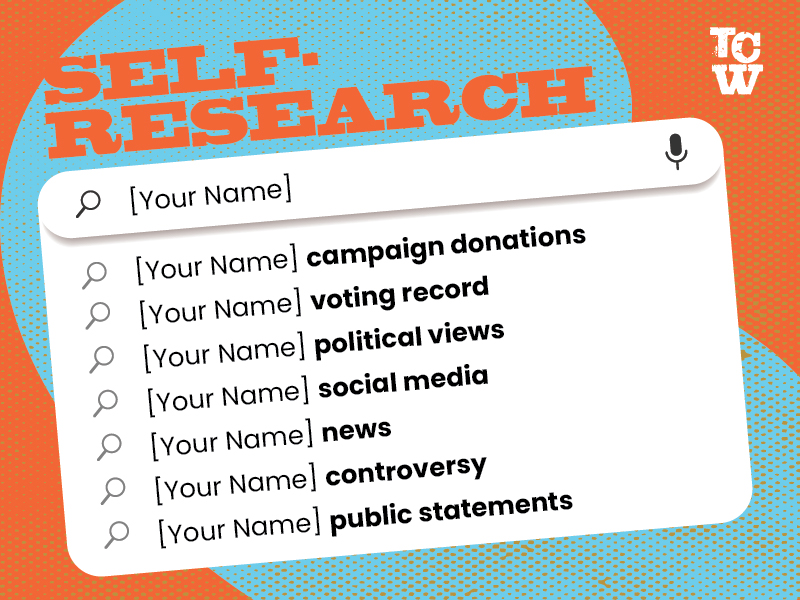
We teach a lot about campaign research, and most candidates see the benefits and try to make room in the budget for polling. But although many candidates will research their opponents, many first-time (and second- and third-time) candidates don’t do a self-research book on themselves. Why, one may ask, would I need research done on me? Whether you dedicate your own time, have a campaign team member help, or employ a professional to dig in, here are our top 3 reasons why self-research is much more important than it may seem.
You won't always remember everything:
That tax lien from 15 years ago you blocked from your memory after countless hours spent on hold with the IRS? Yeah, your campaign team is going to want to know about that.
We all have spotty memories, especially when it comes to our own lives. Over time, details blur, timelines shift, and things that felt insignificant at the time disappear from view. But campaigns operate on precision, and opposition researchers thrive on forgotten details.
Taking the time to systematically review your own history ensures that nothing catches you—or your team—off guard.
What you thought wasn’t a big deal could wind up being a powerful negative against you:
Holding public office is tricky, and there are plenty of pitfalls along the way. One small post you made on Facebook years ago can come back to haunt you — whether your opinion has changed or you simply worded something in a way you wouldn’t today.
Context collapses over time. A joke, a comment, or even an association can be reframed without nuance and used to tell a very different story. Self-research allows you to identify these vulnerabilities early and decide how to address them before someone else defines them for you.
If you or your researcher can find it, the opposition can too:
We live in the digital age. You need to know what’s out there. Your digital footprint is a real thing, and these days your past can take on many forms, from tweets to articles to an old Myspace or dating page.
If you have anything unscrupulous or otherwise in your past, you need to know what’s out there from an objective standpoint so you can figure out how to best respond.
It makes your messaging sharper and more authentic
When you fully understand your own record, you communicate with more confidence and clarity. You’re less likely to overstate, misremember, or unintentionally contradict yourself on the trail.
Self-research forces you to reconcile your past positions, experiences, and decisions with your current message. The result is a tighter, more consistent story—one that voters (and the media) are more likely to trust.
Bottom line: the best campaigns leave as little to chance as possible
Self-research may not be the most exciting part of running for office, but it is one of the most valuable. It reduces risk, strengthens your message, and gives you control over your own story.
The reality is simple: if you don’t take the time to understand your own background, someone else will—and they won’t be looking to tell your story most favorably.
The smart campaigns don’t wait for problems to surface. They find them first, plan for them, and move forward with confidence.
Have questions or want to learn more about self-research? Click below to get in touch or check out the rest of our blog for related content.