
Beat an Incumbent? Can Your Candidate Win? Answer These Questions First.
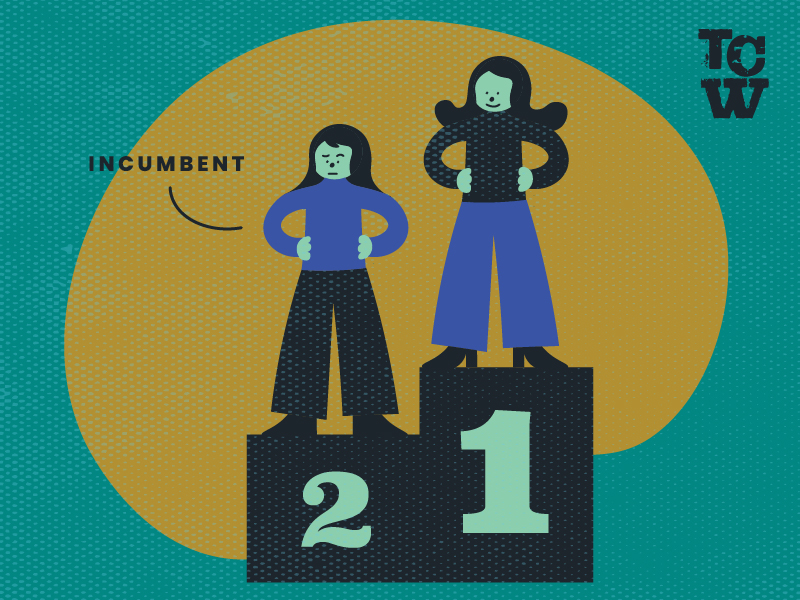
Incumbents are hard to beat. Campaigns start with great intentions, but if you want to beat an incumbent, challengers (non-incumbents) will, 94% of the time, fall short. Many folks try, but on average, only 6% succeed in their quest to beat incumbents.
Why do incumbents lose? Asking this question is a good place to start for challengers looking for a path forward. Most incumbents who lose have endured a scandal, neglected their office, reneged on a promise, shown arrogance, ignored constituent requests for help, been outspent or out-organized by an opponent, or faced a demographic or numerical shift that made the turf favorable for a challenge.
Capitalizing on these factors can put you in a position to win and make incumbency less of an issue. There is no guarantee for any candidate. Why challengers win and incumbents lose is both an art and a science. I have seen this on all sides after working on campaigns for challengers who have ousted incumbents, incumbents who have defeated challengers, and challengers who have lost to incumbents.
So, before you try to beat an incumbent, ask these questions:
- Has the district changed?
- Are they unresponsive?
- Do they have a scandal?
- Are they arrogant?
- Have they gone back on a promise?
- Is there a lack of community support for the incumbent?
- Is the community organized against them?
- Will people publicly stand up against them?
- Is there a strong national trend?
- Can you outspend them?
- Are the numbers in your favor?
- Have numbers changed over time?
- Will you be able to make a real contrast?
- Do you know your numbers?
- Do you have the right team?
- Do you have a clear vision for the office?
- Do you have something the community wants?
Let’s go through your answers.
About Them
Has the district changed? Some incumbents have been in office for more than 20 years. During that time, populations, issues, and districts shift. Sometimes incumbent candidates don’t notice this.
Are they unresponsive? An elected official ignoring their core constituents can determine how vulnerable they are. Job performance is a core factor that pollsters look at to determine whether you can beat an incumbent, but this should not be the sole variable you look at to judge if your campaign will be a success.
Do they have a scandal? If an elected official is facing a scandal, this alone could kill their reelection campaign, but not always. Usually, it takes having more than one factor in your favor to beat an incumbent. If they are good at their job but have faced a scandal, it is not a given that they will lose.
Are they arrogant? Arrogance can turn off voters in a hurry. We have seen seemingly small statements be the deciding factor in a reelection campaign. We have also seen voters ignore a series of bumbles and reelect a seemingly vulnerable candidate. Arrogance, compounded with other factors, can prompt voters to look for an alternative.
Have they gone back on a promise? Taking a stance and then going back on their word can turn voters against an elected official. This can be a game-changer, but it is only part of the picture.
Is there a lack of support for the lawmaker? Over time, has support for the incumbent eroded? Dips in support could be due to other factors on this list–you would need polling and on-the-ground intelligence to determine if this is a longer-term trend.
Is the community organized against them? Are people fired up to work against the elected official? Will they go out and knock on doors and raise money? To find out if this is true, look online for signs of organizing. Learn what has happened at community meetings, and ask folks to assess involvement before you run. Having real ground support is important. Are there people who like you enough and/or dislike your opponent enough to spend real time organizing for you?
Is there a strong national trend in the other direction? As elections become more and more nationalized, a national trend can help unseat incumbents. This alone does not usually make the difference, but combined with other factors, this could make for a more effective challenge.
About You
Do you have something the community wants? As a candidate, you must have the skills and profile to be a good elected official. Have you shown real leadership in the community? Do people like you? A strong profile can set you up to win. A good public profile is part of a package—but being the best qualified (or even being well-liked) does not guarantee a victory.
Can you outspend them? This is a big sticking point. Challengers who win have historically outspent the incumbents they faced. So, do you have a real network of friends and family who will write you checks? Can you take time off from work? Will you dedicate yourself to dialing for dollars? Incumbents who have raised no money are generally vulnerable, but ones who have raised a lot do it to show their strength early on.
Are the numbers in your favor? If you are running in a partisan or nonpartisan race, numbers such as likely voter turnout and the share of the population engaged in politics can have a significant impact on your race. Has there been a demographic or electoral shift? Have the numbers in the area changed since the last real election the incumbent had? These factors can make a big difference in a race. Understanding democratic performance and how the average Democrat performs in the district will give you a quick snapshot of how compatible the district is for your candidacy.
Do you know your numbers? Having a vote goal and a real plan for how you will identify, engage, and turn voters into supporters are critical ingredients for a winning campaign.
Will you make a real contrast? This is both a resource question and an approach question. Running for office is not for the faint of heart. If you won’t have the resources or the fortitude to show the real differences between you and your opponent, it will be hard for you to beat an incumbent. Remember, you are asking folks to fire their elected official—you need to give them a reason to do so.
Have you built the right team? Campaign operatives and political consultants cost money, but depending on the size of and budget for your race, a campaign of almost any size can find the help they need. Finding a diversity of viewpoints for your team is a critical step in building a winning campaign. As you build your team, ask yourself—are folks going to be with you for the long haul? Are they providing different and helpful perspectives? Is your team able to create an actionable plan to win? Can you afford this team?
Do you have a clear vision for the office? It is not enough to say bad things about your opponent. You need to be able to articulate a real vision for the future and tell voters what you want to do. This is not really something a consultant can do for you. You need to know why you are running for office.
Before you try to beat an incumbent, make sure you can answer yes to the questions on the list. If you are already running, use this list to hold yourself accountable and make sure you have clear metrics for success to consult throughout your campaign.
Real examples:
Sen. Bill Cassidy (R-LA): Lost his primary. Was the first sitting senator to lose a primary since 2012. Cassidy voted to convict Trump after January 6. MAGA Republicans organized against him.
Sen. John Cornyn (R-TX): Lost his primary. Was not seen as loyal to Trump, and was seen as out of touch with his primary electorate. MAGA Republicans organized against him.
Rep. Thomas Massie (R-KY): Lost his primary to a Trump-backed challenger. Massie repeatedly clashed with Trump and was seen as an obstacle rather than an ally.
Rep. Al Green (TX 18th): Reps. Al Green and Christian Menefee were drawn into the same district. Green, who previously represented the 9th District, was put in a district that he did not represent the majority of and was not as connected to.
State Legislative:
Pennsylvania: Reps. Greg Vitali and Keith Harris both lost in an organized effort against the Philadelphia Democratic establishment from the left.
North Carolina: Three Democratic incumbents (Reps. Shelly Willingham, Nasif Majeed, and Carla Cunningham) all lost to challengers from their party’s left. They had sided with Republicans on key votes, which made them targets and not aligned with their primary electorate.
2022 Election Cycle: In 2022, a few Congressional incumbents lost. The reasons track closely with our list: scandal, change in district, unresponsiveness, lack of community connection, arrogance, going back on a promise, lack of community support, and the community organized against them.
Tom Malinowski (NJ-7): Redistricting made the district more Republican going into the cycle. Malinowski also faced damaging STOCK Act controversy, failing to properly disclose stock trades in companies he had oversight of on the Foreign Affairs Committee. Tom Kean Jr. was well-funded and had name recognition as the son of a former governor. The national environment (inflation, Biden drag) also hurt, in what was always a competitive seat.
Elaine Luria (VA-2): Redistricting this competitive district made it more Republican. Her opponent, Jen Kiggans, a Navy veteran and state senator, credibly competed for the military vote. Luria’s prominent role on the January 6 committee also energized Republican turnout against her.
Sean Patrick Maloney (NY-18): After redistricting scrambled New York’s maps, Maloney vacated his old district and ran in a new district, effectively pushing out Mondaire Jones (a Black incumbent) and generating conflict within the party. He ultimately ran in NY-18 after the maps shifted. The perception that he was disconnected from the district, combined with a strong opponent in Mike Lawler and a rough national environment, sank him.
Cindy Axne (IA-3): Axne had been surviving in IA-3 (Des Moines area) by running strong locally, but redistricting made the seat harder, and by 2022, there was less room for a Democrat to survive. Inflation hit Iowa voters hard, Biden was unpopular in Iowa, Zach Nunn ran a disciplined race, and the environment caught up with her.
Primary Losses (House):
Liz Cheney (WY): Lost her primary badly to Harriet Hageman after voting to impeach Trump and being a part of the January 6 Committee. She was seen as being out of touch with the current Republican politics and MAGA Republicans who organized against her.
Peter Meijer (MI-3): Voted to impeach Trump and lost a primary to John Gibbs, a more conservative MAGA candidate. Gibbs then lost the general election.
Jaime Herrera Beutler (WA-3): Lost primary. She voted to impeach Trump and was ousted by the MAGA base.
In 2020, a few high-profile congressional incumbents lost. The reasons for the losses again track closely with our list: Change in district, unresponsiveness, lack of community connection, scandal, arrogance, going back on a promise, lack of community support, and their community organized against them.
Scott Tipton (CO-3): Lost his Republican primary because he was seen as too moderate (unresponsive, lack of community support, community organized against them).
Steve King (IA-4): Racist and arrogant, King was stripped of committee assignments before losing his seat (unresponsiveness, lack of community connection, scandal, arrogance).
Denver Riggleman (VA-5): Lost his seat in a Republican convention after performing a same sex wedding (lack of community support, community organized against them).
Daniel Lipinski (IL-3): A pro-life Democrat, Lipinski was seen as out of touch with a district that had changed over time (change in district, unresponsive, community organized against him).
Elliot Engel (NY-16): Served for 31 years and lost touch with a changing district. He was seen as ineffective and not connected with a district that had changed over time (district changed, unresponsive, community organized against him).
Steve Watkins (KS-2): Charged with voter fraud and lost connection with his base (scandal).
Lacy Clay (MO-1): 19-year Congressman seen as out of touch, lacking community connection and support. Seen as disconnected from the Black Lives Matter movement (district changed, unresponsive, community organized against him).
Just because an elected official has issues does not mean they will lose, but it gives challengers more of a shot.
Want to beat an incumbent? Have questions? Ask them here!
If you haven’t already, check out our eBook: GOTV: Tools for Building a Winning Program.